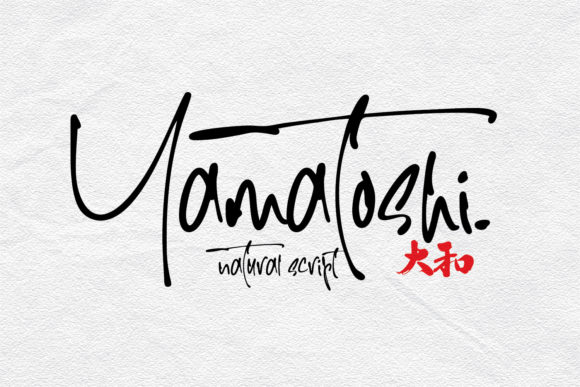
Yamatoshi: A Handwritten Script Font Inspired by Japanese Calligraphy
Yamatoshi is a handwritten script font that draws its inspiration from the rich tradition of Japanese calligraphy. Designed to capture the natural flow and elegance of traditional brush strokes, Yamatoshi brings a unique aesthetic to digital typography. Its organic curves and expressive forms make it ideal for creative projects that require a free-spirited, artistic touch.
Why Yamatoshi Stands Out
What sets Yamatoshi apart is its ability to blend tradition with modern design. Unlike many fonts that rely on rigid structures, Yamatoshi embraces imperfection and variation, reflecting the essence of hand-drawn writing. This makes it particularly appealing for designers, marketers, and content creators who want to add a personal, authentic feel to their work.
The font’s versatility allows it to be used in a wide range of applications—from branding and packaging to social media posts and website headers. Its natural charm can elevate any design, adding warmth and character without overwhelming the visual hierarchy.
Common Mistakes When Using Yamatoshi
While Yamatoshi offers great creative potential, there are several common mistakes users often make when choosing or applying it. Understanding these can help you avoid pitfalls and achieve better results.
- Choosing the wrong weight or style: Yamatoshi comes in multiple variations, each with its own personality. Selecting a weight that doesn’t match your project’s tone can lead to miscommunication or an unbalanced design.
- Ignoring spacing and kerning: Because Yamatoshi is a handwritten font, proper spacing is crucial. Poor spacing can make text appear cluttered or difficult to read, especially at smaller sizes.
- Using it in inappropriate contexts: While Yamatoshi is beautiful, it may not be suitable for all types of content. For example, using it for body text in a professional document could reduce readability and professionalism.
- Not considering file formats: Always check the available file formats before downloading. Some versions may only be available in .otf or .ttf, which might not be compatible with certain platforms or software.
- Overlooking licensing restrictions: Some versions of Yamatoshi may have limited usage rights. Make sure you understand the license terms to avoid legal issues, especially if you’re using it for commercial purposes.
How These Mistakes Can Affect Your Work
Mistakes like choosing the wrong weight or ignoring spacing can significantly impact the effectiveness of your design. Poorly spaced text can confuse readers and reduce engagement, while mismatched styles can create a disjointed brand image.
In professional settings, using Yamatoshi inappropriately can also affect how your audience perceives your work. A font that’s too informal for a formal document can undermine credibility and professionalism. On the other hand, using it in the right context can enhance creativity and connection with your audience.
Practical Advice for Better Results
To get the most out of Yamatoshi, start by understanding its strengths and limitations. Here are some tips to help you use it effectively:
- Test it in different contexts: Before committing to Yamatoshi for a major project, test it in various scenarios—like headings, subheadings, and body text—to see how it performs.
- Use it as a highlight rather than a default: Yamatoshi works best when used selectively. Reserve it for titles, logos, or emphasis rather than entire paragraphs.
- Pair it with complementary fonts: Combine Yamatoshi with a clean sans-serif or serif font to balance its organic nature and ensure readability.
- Check compatibility and performance: Ensure that the font renders well across different devices and platforms. Test it on mobile and desktop to avoid unexpected display issues.
- Review licensing carefully: Always read the fine print before using a font commercially. Some licenses may restrict usage in print, web, or video content.
What to Check Before Using Yamatoshi
Before making a decision to use Yamatoshi, consider the following factors:
- Your target audience: Is the font appropriate for your audience’s age, culture, and expectations?
- Your project’s purpose: Will Yamatoshi support your message or distract from it?
- Technical requirements: Does the font meet the technical needs of your platform or software?
- Cost and availability: Are there any hidden costs or limited access to specific versions?
- Legal compliance: Have you reviewed the licensing terms to ensure proper usage?
By taking these steps, you’ll be better equipped to choose and apply Yamatoshi in a way that enhances your design without compromising quality or usability.
Conclusion
Yamatoshi is more than just a font—it’s an expression of artistry and cultural heritage. When used thoughtfully, it can bring a fresh, dynamic energy to your designs. By avoiding common mistakes and focusing on practical application, you can unlock its full potential and create visually compelling content that resonates with your audience.