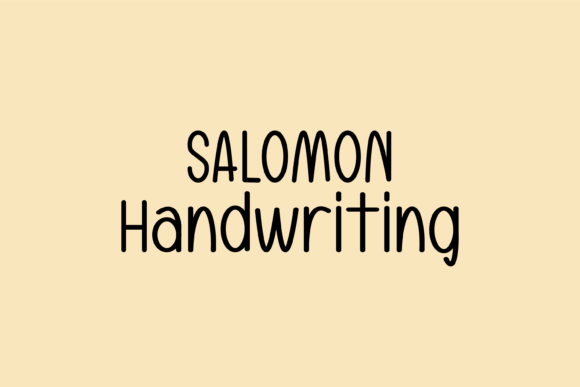
Salomon: A Handwritten Font That Adds Character to Your Designs
When it comes to typography, the right choice can make or break a design. Salomon is a handwritten font that stands out for its friendly and whimsical style. Designed with a touch of personality, this typeface brings warmth and charm to any project. Whether you're creating logos, wedding invitations, or promotional materials, Salomon offers a unique visual appeal that can elevate your work.
What Makes Salomon Unique?
Salomon is more than just a font—it's an expression. Its design draws inspiration from casual handwriting, making it feel personal and approachable. The letters are crafted with a natural flow, giving them a handcrafted look that feels genuine. This font is ideal for those who want to add a sense of authenticity and creativity to their designs.
One of the standout features of Salomon is its versatility. It works well in both digital and print formats, making it suitable for a wide range of applications. The font’s structure allows for easy readability, even at smaller sizes, which is essential for maintaining clarity in various contexts.
Comparing Salomon with Similar Options
While there are many handwritten fonts available, Salomon has a distinct character that sets it apart. Fonts like Baskerville, Playfair Display, and Raleway offer elegant or modern alternatives, but they lack the playful and quirky nature of Salomon. These fonts are often used for more formal or professional settings, whereas Salomon thrives in creative and informal environments.
For those looking for a similar vibe, Courier New or Comic Sans MS might come to mind, but these are more utilitarian and less stylized. Salomon strikes a balance between fun and professionalism, making it a great middle ground for designers who want to maintain a friendly tone without sacrificing quality.
Strengths and Tradeoffs of Using Salomon
The primary strength of Salomon lies in its ability to convey emotion and personality. It’s particularly effective in projects where a warm and inviting atmosphere is desired. From greeting cards to social media posts, this font adds a human touch that resonates with audiences.
However, like any font, Salomon has its limitations. Its playful nature may not be appropriate for all contexts. For instance, in more serious or formal documents, such as legal contracts or academic papers, a more traditional font would be better suited. Additionally, while the font is generally readable, some users may find the irregularity of the strokes challenging when using it in large volumes of text.
Best-Fit Situations for Salomon
Salomon shines in scenarios where creativity and individuality are valued. It is especially well-suited for:
- Wedding Invitations: The soft and elegant curves of the font create a romantic and personal feel.
- Logos and Branding: Its unique style can help a brand stand out in a crowded market.
- Quotes and Social Media Content: The font’s friendly nature makes it perfect for sharing inspirational messages or personal thoughts.
- Print Materials: Whether it's a magazine cover or a flyer, Salomon can add a distinctive flair.
In these situations, the font’s character enhances the overall message, making it more engaging and memorable.
When to Consider Alternatives
While Salomon is a fantastic choice for many applications, there are times when other fonts may be more appropriate. For example:
- Professional Documents: In formal settings, a more structured font like Arial or Times New Roman is often preferred.
- Large Bodies of Text: If you’re working on a lengthy article or report, a font with greater legibility and consistency, such as Georgia or Verdana, might be a better fit.
- Technical or Scientific Writing: These types of content usually require a clean and precise font to ensure clarity and professionalism.
By understanding the context in which you’ll use the font, you can make a more informed decision about whether Salomon is the right choice for your project.
Practical Examples and Comparisons
To better understand how Salomon performs in different scenarios, consider the following examples:
Example 1: A local bakery wants to create a new logo. They choose Salomon because it reflects the cozy and welcoming nature of their business. The font helps establish a friendly brand identity that appeals to their target audience.
Example 2: A designer is working on a wedding invitation. They opt for Salomon to give the invitation a personal and artistic touch. The font complements the overall aesthetic, making the invitation feel more intimate and meaningful.
Example 3: A small business owner is promoting a product through social media. They use Salomon in their promotional posts to create a more engaging and visually appealing message. The font helps draw attention and encourages interaction.
These examples demonstrate how Salomon can be adapted to suit a variety of needs while maintaining its signature style.
Making an Informed Decision
Choosing the right font involves more than just aesthetics—it also depends on the purpose, audience, and context of your project. Salomon is a great option when you want to add a personal and whimsical touch to your designs. However, it’s important to consider whether the font aligns with your goals and the expectations of your audience.
Ultimately, the best approach is to experiment with different fonts and see which one feels most natural for your specific use case. By evaluating the strengths and limitations of Salomon, you can make a decision that enhances your design while staying true to your vision.